International Studies Major
College of Letters and Science & The International Division
Specialization Options
The IS Major has four options of specialization. Students choose an option when they declare.
Human Rights and Humanitarianism
Human Rights and Humanitarianism covers the range of laws, norms, and organizations that address the protection of vulnerable populations and ordinary citizens. This option will cover human rights, as they are are codified in the Universal Declaration of Human Rights; hence they will cover the civil and political rights (speech, belief, association and discrimination), and cultural rights (education, health, water, among others). Human Rights and Humanitarianism also encompasses the organizations and institutions that work to protect and advocate for these rights, and addresses the ways in which civilians are protected when thrust into conditions of hardship, including the laws of war, regimes on migration and forced migration, global health disparities, and more.
Global Peace and Security
Global Peace and Security includes an emphasis on both traditional and non-traditional understandings of international security. Traditional understandings of international security include war and interstate conflict. Non traditional forms of security and insecurity include issues like pandemics, climate change and natural disasters, cybersecurity, and food security. This option also emphasizes the importance of peacekeeping, other multilateral efforts to mediate conflict, counterinsurgency, and post-conflict peacebuilding as core to an understanding of global security.
Politics and Policy in the Global Economy
The Politics and Policy in the Global Economy option address the question, “Why do we live in a world of haves and have-nots? Is it possible to “make poverty history” and, if so, how?” This option offers a multidisciplinary survey of the key factors that shape the distribution of wealth and resources in our world. This includes institutions that govern international trade and transactions, different regimes of aid, development, and philanthropy, issues related to natural resource use and environmental problems, the interactions between states and markets, and the politics of alternative and non-market economies. The track offers both quantitative and qualitative approaches to understanding the global economy drawing from a range of disciplines.
Culture in the Age of Globalization
Culture in an Age of Globalization focuses on how global interactions shape culture. This option addresses how we think about culture as something that we do (as opposed to something that “is”)—we are constantly creating and re-creating culture through our practices, and those practices are often influenced by (or influence) the practices of people in other places. In this option you will have the opportunity to think about how people make meaning in their world and the ways in which group identities, boundaries and meanings are continually created, maintained and transformed, often through global interactions. Substantive topics include gender, social class, ethnicity, religion, music, art, film, media, literature, food, sports, language, migration, and nationalism, just to name a few. Our focus throughout is on the intercultural—the ways that systems of meaning interact within and across social and political boundaries in ways facilitated by transnational migration, new information technologies and global markets.
Vision and Values
THREE CORE IDEAS
The International Studies Major takes an interdisciplinary approach to studying global issues. This work is guided by what we call an IS perspective, and is grounded in three core ideas:
- (1) A relational, interactional, contextually rooted understanding of global forces and dynamics
- (2) The mutual constitution of the global and the local
- (3) The importance of a broad, interdisciplinary approach to global issues
INTERDISCIPLINARY APPROACH
International Studies approaches questions and issues both from an inside-out and an outside-in perspective. We consider forces at the global level to be just as important as local-level actors and interactions. This perspective means that we often approach global issues from a grassroots perspective. That is, we emphasize context-sensitive, place-based approaches over abstract, predictive models. We also advocate relational analysis. Rather than viewing different places as separate, bounded communities—“us” and “them”—we look at the transnational ties that bind together the fates of people in different parts of the world. As we try to understand complex global interactions we strive to integrate and build on the best ideas from relevant disciplines. Instead of confining ourselves to one set of tools we seek to find the most suitable framework for the task at hand.
GLOBAL PERSPECTIVE
At the core of the International Studies major is a fundamental recognition that world outside of the United States and outside of the Global North matters, and matters in its own right. In International Studies we seek to understand not only how global forces are reshaping nations, communities and individuals, but also how from-below forces are reshaping the globe. Furthermore, we understand all of these processes to affect one another. As a result, rather than isolating a particular issue the emphasis in International Studies is on how challenges such as poverty, insecurity, ill health, and climate change are entangled with one another.
Learning Outcomes and Objectives
Through pursuing an IS Major our students should be able to:
- Approach global questions through the lens of unequal interdependencies.
- Understand how our lives are shaped by global interdependencies.
- Analyze case studies to understand the impacts of global interdependencies on people and places in other parts of the world.Integrate place-based studies to move from abstract conceptions to everyday lived experiences.
- Develop critical thinking skills to evaluate arguments about the causes and consequences of global processes. Approach dominant preconceptions of the world critically and evaluate them with data.
- Analyze evidence to construct their own arguments about global transformations.Develop independent research skills and learn to communicate findings effectively.
- Apply an interdisciplinary sensibility to global processes outside of the classroom.Bring the skills acquired in IS to understanding events and processes beyond the classroom.

The Global Security track through the International Studies major at UW–Madison has allowed me to pursue classes aligned with my my passions, connect me with more international experiences, provide me with extremely supportive advisors, and help me connect my other academic disciplines to security and peace at an international scale!
The IS major gave me the opportunity to broaden my understanding of myself in relation to the world around me. By exploring international topics such as human trafficking, social movements, borderlands, and education, I was able to connect my classroom learning to contemporary issues within and beyond the United States.

I loved to learn about culture and the history behind what makes humanity, what makes a people unified, what makes them diverse, and how God’s design echoes throughout generations. My major has opened new doors and new perspectives on how the world is shaped and how it has shaped me. The more I learned about our world, the more I found pieces of myself in it. International studies has shown me that understanding the world isn’t just passive, but it is a responsibility. I’m leaving with the intention of listening better, learning more, and showing up for people beyond my own experiences.
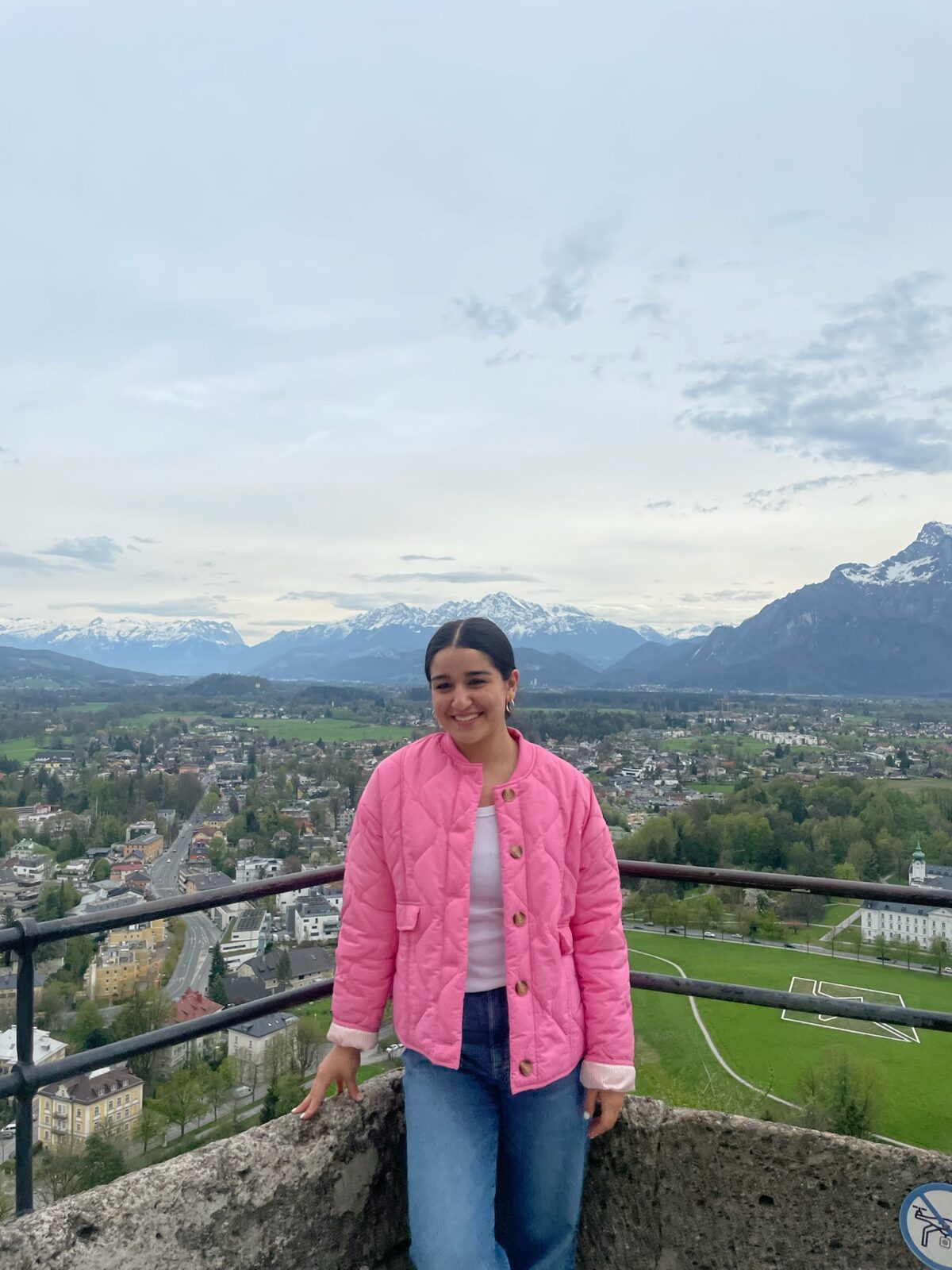
During my time here and through my study abroad experience, my IS major gave me the opportunity to explore how culture shapes the way we connect, communicate, and understand the world around us. It pushed me to step outside of my comfort zone, embrace new perspectives, and better understand the communities around us. Along the way, I discovered how powerful sports can be in bringing people together across cultures, something that defined my experience as a Badger and shaped my future goals.
Our Shared Future
The University of Wisconsin–Madison rests in the ancestral land of the Ho-Chunk Nation, the People of the Big Voice, who have called this place Teejop (day-JOPE) for time immemorial. We as a university community continue to create and build upon our partnerships with the 12 First Nations of Wisconsin. As a state university we respect the inherent sovereignty and unique legal status, as affirmed and set forth in state and federal law, of the First Nations of Wisconsin.
Institutional Statement on Diversity
Diversity is a source of strength, creativity, and innovation for UW–Madison. We value the contributions of each person and respect the profound ways their identity, culture, background, experience, status, abilities, and opinion enrich the university community. We commit ourselves to the pursuit of excellence in teaching, research, outreach, and diversity as inextricably linked goals.