International Division
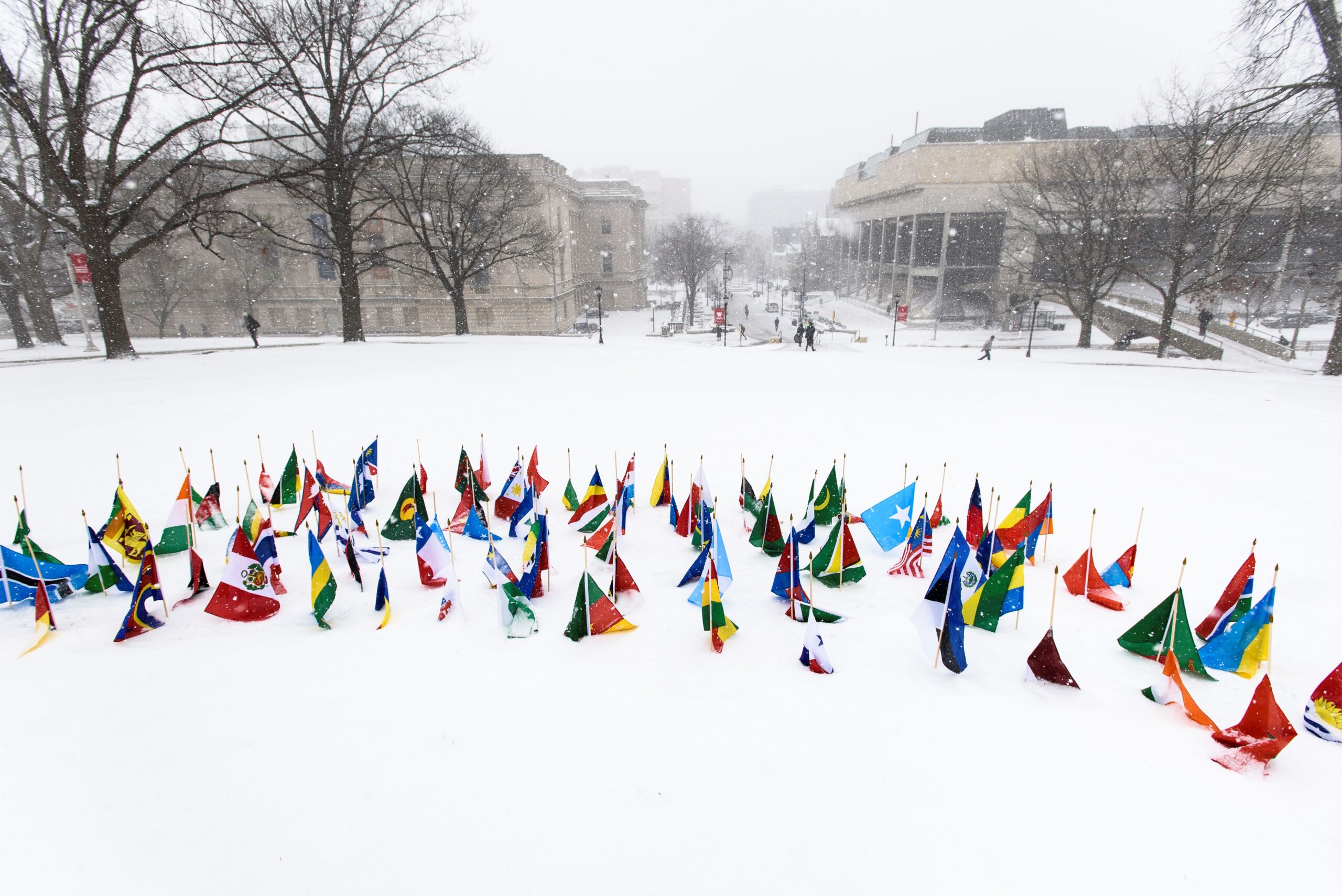
The International Division advances international education, promotes global research partnerships, and builds inclusive excellence through the engagement of students, staff, faculty, and alumni from around the world. Through our work, we lead campus internationalization efforts that promote the Wisconsin Idea at home and abroad and ensure the university’s pre-eminence as a global leader in public education.
Institute for Regional and International Studies (IRIS)
Institute for Regional and International Studies (IRIS) comprises and provides coordination and administrative support for Wisconsin’s eight area study center, and for the undergraduate International Studies Major of the College of Letters and Science.
The African Studies Program supports research, teaching, and outreach at the University of Wisconsin–Madison, bringing together scholars in multiple disciplines, students, teachers, and community partners to consider all aspects of land and life in Africa.
The African Studies Program is a unit in The International Division, and a member of the campus consortium of internationally oriented programs known as the Institute for Regional and International Studies.
The Center for East Asian Studies (CEAS) is the focal point connecting East Asia to the University of Wisconsin–Madison. CEAS is dedicated to all aspects of research, education and outreach related to China, Japan, Korea, Taiwan, and Mongolia.
CEAS encourages and supports the cross-disciplinary and interdisciplinary study of East Asia. Our center helps to coordinate the community for the study of East Asia on campus, across the UW system, and throughout the state of Wisconsin. Finally, we work to disseminate knowledge about East Asia to better the education and cultural literacy of UW students as well as the general public.
The Center for European Studies (CES) at the University of Wisconsin–Madison educates university audiences, the K-14 community, the broader public and state agencies about Europe. CES brings together scholars from across the campus and links departments, courses, and people to offer further stimulation through symposia, conferences, and guest speakers on a variety of topics concerning Europe.
The UW–Madison is home to more than 20 departments offering Europe-related courses. Students at the university have the opportunity to study almost all European languages.
European Studies is comprised of the Center for European Studies, the Center for German and European Studies, and the Jean Monnet European Union Center of Excellence.
LACIS looks to serve as a local, regional, and national resource center that provides outreach, support services, and information to another university units, K-16, government, civic community and business constituencies.
The Middle East Studies Program (MESP) fosters knowledge of the Middle East, its past and current economic, social and political developments, and seeks to facilitate teaching, learning, research and public awareness of the diverse array of Middle Eastern languages, cultures, and peoples.
At the core of MESP’s mandate is the pursuit of firsthand knowledge about the range of cultures, languages, and challenges that make this region so unique.
All countries, topics and political positions are studied. Our broad interdisciplinary approach encompasses the humanities and social sciences as well as the arts and natural sciences.
CREECA’s mission is to support research, teaching, and outreach on Russia, Eastern and Central Europe, and Central Asia. CREECA approaches this three-part mission by promoting faculty research across a range of disciplines; by supporting graduate and undergraduate teaching and training related to the region; and by serving as a community resource through outreach activities targeted to K-12 teachers and students, other institutions of higher education, and the general public.
The Center for South Asia at the University of Wisconsin – Madison is made up of a community of faculty and staff who reflect the diversity and global relevance of South Asian Studies. Through our diverse academic disciplines, summer language institute, annual conference, student organizations and outreach programs, the Center seeks to define and promote greater understanding of South Asian history, language, religion and culture. We also support linkages to other relevant area studies and global studies programs that emphasize transnational flows of culture, people, money in ways that are important to a better understanding of South Asia both in the past and the present.
The Center for Southeast Asian Studies at the University of Wisconsin–Madison fosters a wide variety of research, teaching and outreach activities about Southeast Asia. We promote greater understanding of the Southeast Asian region through academic year courses, a summer language institute, study abroad opportunities, a publication series, outreach activities, a weekly public lecture series, student research and study grants, and degree programs. Our faculty and students are a vibrant community of scholars with research and teaching interests in a wide variety of academic disciplines. The Center operates a vigorous and well-developed program committed to the study of Southeast Asia that is recognized as one of the best worldwide.
Other International Programs
International Academic Programs (IAP)
International Academic Programs (IAP), or Study Abroad in the International Division, serves as a comprehensive resource for academic experiences worldwide.
International Academic Programs collaborates with academic units to develop and deliver high-quality study abroad programs that foster students’ academic, personal, & professional growth. Please visit IAP’s website for more information on studying abroad, and international academic experiences.L
Wisconsin Intensive Summer Language Institutes
Please visit the WISLI website for more information on the variety of intensive language learning programs offered at UW–Madison.